| Identification and characterization of pancreatic cancer genes located within novel localized copy number alterations; funded by Department of Science and Technology (2006-2009) and Department of Biotechnology (2011-2014). |
|
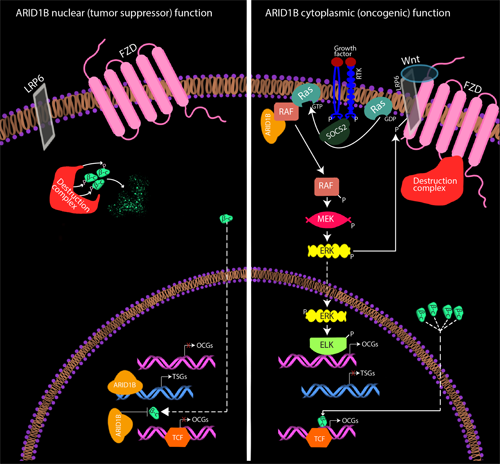
Pancreatic cancer is the fourth leading cause of cancer death in the United States and Europe and the incidence rate almost parallels mortality rate. The highly invasive and metastatic nature of this cancer makes it refractory to conventional treatment regimens. In collaboration with Dr Jonathan R Pollack, Stanford University and Dr Anirban Maitra, Johns Hopkins University, we had earlier used aCGH and gene expression microarrays to identify novel copy number alterations in pancreatic cancer. Using a combination of cell and molecular biological approaches, we have commenced the characterization of two novel tumor suppressor genes located within novel homozygous deletions at 6q25 and 18q23. Results indicate that the genes may play an important role in processes relevant to tumour progression including chromatin remodeling and cell motility.
|
|
| Fig.1. Functional characterization of a novel pancreatic cancer tumor suppressor gene (TSG). Colony forming assay reveals a possible tumor suppressor role for a novel pancreatic cancer gene. Permanent transfectants generated in a pancreatic cancer cell line for the putative TSG form colonies that are less in number and size (panel A) than those generated from the vector alone (panel B). Panel C shows graphical representation of the result. Student’s t test p value is shown. |
Md Khursheed: SRF
Dr Jayaprakash Kolla: Project Associate
K Viswakalyan: Research Assistant |
|
|
| Last updated on : Monday, 27th February, 2012. |